mar 11 2026 · updated aug 21 2026
By Jack ViragWhat belongs in an AI knowledge base for marketing teams
A practical model for deciding what marketing teams should actually put into an AI knowledge base so agents stay useful and grounded.
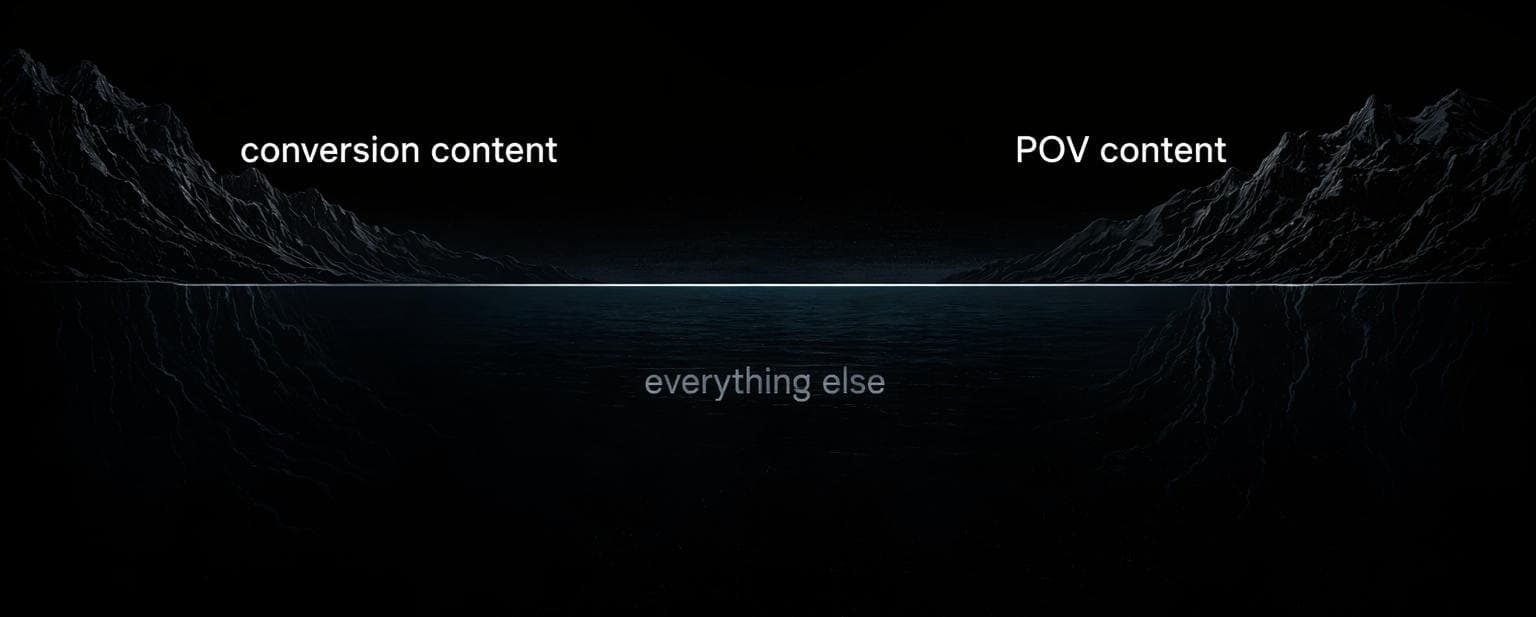
Most teams stuff random docs into a knowledge base, call it context, and then act surprised when the agent still sounds confused.
The problem usually is not access. It is curation.
Once you start looking at vendor docs, RAG guidance, and agent documentation, the pattern is almost boring. Everyone keeps rediscovering the same facts: irrelevant sources hurt retrieval, stale sources create bad answers, giant blobs are harder to use, and loosely maintained knowledge turns the model into a very confident rumor machine.
That is not just a technical retrieval issue. For marketing teams, it becomes a systems problem fast. The wrong knowledge base does not merely produce weaker answers. It quietly pushes your briefs, landing pages, comparison posts, and update workflows toward generic sludge.
If you have already read living docs for agents, markdown knowledge systems, and what a Context OS is, this is the practical curation layer. The question is no longer "can we connect docs to AI?" The question is "which knowledge actually belongs in the operating layer, and which knowledge should stay out?"
Why this matters now
The market signal is repetitive in a useful way
This topic survives the stricter workflow because the external signal is not vague. It is consistent across multiple types of sources.
The public signal is not subtle. Agent knowledge-base docs keep emphasizing quality over quantity. RAG guidance keeps returning to grounding, freshness, and source selection. Product pages for knowledge tools keep marketing structure and relevance because those are the real failure points. The pattern is consistent enough to justify the topic on its own.
It also makes the gap obvious. Most public material explains how to ingest sources into a knowledge system. Much less of it explains how a marketing team should decide what actually deserves to live there.
The best public guidance is more conservative than most teams are
That part is worth noticing.
The strongest documentation in this category is not saying "pour more stuff into the machine." It is saying the opposite.
Google Cloud's guidance for knowledge documents recommends excluding irrelevant content, avoiding inactive or outdated docs, and breaking long docs down when they get unwieldy. Agent.ai's knowledge-base documentation says almost the same thing in plainer language: curate useful sources, remove boilerplate, keep content fresh, and prefer clear structure. AWS frames grounding and RAG around domain-specific truth because that is the point of the whole architecture.
That matters because a lot of marketing teams still carry the opposite instinct. They think more context must mean better answers. In practice, low-quality abundance often just widens the retrieval surface for irrelevant or outdated information.
Marketing teams have a more specific problem than the SERP usually addresses
The generic version of this topic asks what a knowledge base is. That is not the useful question for a team actually trying to run AI-assisted marketing operations.
The more important question is narrower: which sources belong in the operating layer if the goal is reliable execution across briefs, drafts, updates, and publishing workflows?
That is where the public guidance starts getting thin. The retrieval literature explains grounding. The vendor pages explain ingestion. What is often missing is the operating judgment in the middle: what should count as first-class context for a marketing team, and what should stay out of the system.
That is the decision that changes whether the knowledge base becomes a working substrate or just a larger pile of searchable documents.
What the knowledge base is supposed to do
It should reduce guessing at workflow time
The job of the knowledge base is simple to describe and surprisingly easy to mess up.
It should help the system answer:
- What is true about our company
- What is true about our product
- What is true about our audience
- What rules constrain communication and execution
That sounds obvious until you watch how teams actually build these things. Then you realize many "knowledge bases" are just mixed piles of PDFs, stale notes, exports, docs, transcripts, and presentation junk thrown into a vector index with a little hope on top.
Public guidance keeps warning against that for a reason. Google Cloud explicitly recommends excluding irrelevant leading content and inactive material because it harms suggestion quality. Agent.ai says quality beats quantity, and even gives a practical recommendation around keeping the source set focused. The pattern is clear: retrieval works better when the knowledge base looks less like a corporate attic and more like a maintained working library.
For marketing teams, reducing guessing means the system can resolve specific workflow questions cleanly:
- Which positioning is current
- Which claims are safe
- Which audience pain points matter
- Which writing rules apply
- Which pages or modules count as source truth
That is a higher standard than "the assistant can vaguely answer questions about the company."
It should support marketing tasks, not generic chat
This is the line most teams blur.
A useful marketing knowledge base should be shaped around the work:
- Creating briefs
- Drafting pages and posts
- Updating product-adjacent content
- Writing comparisons
- Connecting new pages into existing clusters
- Enforcing QA and publishing rules
If a source does not improve one of those jobs, it should probably not be in version one.
That is the practical lesson hiding inside a lot of vendor guidance. When Google says include useful documents and exclude low-utility ones, it is really saying the same thing: usefulness is task-relative. "Could this maybe help someday" is a terrible inclusion criterion.
This is also why task framing beats storage framing. A folder tree that mirrors your company drive is not necessarily a good retrieval layer. A source set organized around drafting, validation, updates, and comparisons is much closer to how the workflows will actually use it.
It should stay anchored to source truth
A knowledge base is not a separate truth layer. It is an exposure layer for truth that should already exist somewhere maintainable.
That means your best sources are usually the documents with clear ownership and update paths:
- Product brief
- Pricing or offer notes
- Audience and positioning docs
- Writing and publishing guides
- Governance and QA rules
- Core website and docs content
The farther you drift from maintained sources, the faster retrieval quality turns into politics and folklore.
That is one reason Deadwater's model works better when it is code-first and system-first. You can expose the sources that already carry operational truth instead of inventing a parallel shadow system full of stale copies.
What should actually go in
Product truth and offer structure
This is the first layer because it is the easiest one to quietly get wrong.
The system needs reliable answers to:
- What the product or service is
- What it does not do
- What implementation paths exist
- Who it is for
- Which claims are safe
For Deadwater, the product brief is exactly the kind of document that belongs in the knowledge base. It defines positioning, offer structure, audience fit, and claims to avoid. Without that, the model will still produce copy. It will just produce broader, softer, more generic copy that slowly detaches from the real business.
This is not a dramatic hallucination problem most of the time. It is a drift problem. The workflow starts saying the service is for everyone, promising things you do not actually promise, or flattening the difference between a workflow build and a Context OS. That kind of drift is subtle enough to survive a few reviews before it becomes normal.
Audience truth, pain, and buying context
Marketing teams also need retrieval over audience truth, not just product truth.
That includes:
- ICP definitions
- Recurring pain points
- Objections
- Sales language
- Competitive positioning notes
This is the material that prevents the system from writing technically correct but emotionally empty content.
It also makes topic research much better. Once the system can connect external search demand to real buyer pain, the shortlist gets sharper. You stop choosing topics that are merely relevant to the category and start choosing topics that are relevant to the people who might actually buy, influence, or validate the work.
That is a big difference. A lot of AI content stacks sound smart and still miss the stakes. They know the nouns. They do not know the pressure.
Style, policy, and execution rules
This is the layer teams usually forget until the output starts looking uncanny.
You need the system to know not just what to say, but how and under which boundaries. That includes:
- Writing style guides
- Capitalization and formatting rules
- Publishing standards
- Governance rules
- QA requirements
That is where articles like governance for agents and content quality assurance for AI pipelines stop being ideas and start becoming runtime controls.
One useful way to structure that source set is like this:
knowledge_base:
  product_truth:
    - product_brief
    - pricing_notes
  audience_truth:
    - icp_docs
    - objection_library
  execution_rules:
    - style_guides
    - publishing_workflows
    - governance_policies
That layout is not magical, but it forces a better question: which documents tell the system what is true, and which documents tell it how to behave?
If you are building this in AirOps, not every concise positioning or audience field has to live in the retrieval corpus. The platform's Brand Kit is designed for structured, reusable brand context, while Knowledge Bases handle larger source collections searched at runtime. The AirOps Brand Kit vs Knowledge Base guide shows where that implementation boundary sits.
What usually should stay out
Uncurated archives and low-ownership junk
This is where teams need more restraint than they usually want.
Old decks, abandoned roadmap notes, duplicated exports, dead competitor analyses, random screenshots, and forgotten meeting dumps feel harmless because they are "just more context." They are not harmless. They widen the retrieval surface for garbage.
That is exactly the risk public guidance keeps trying to warn people about. Agent.ai explicitly advises against uploading huge amounts of barely relevant material. Google recommends excluding inactive or low-utility documents. The core principle is the same: noise competes with truth.
If there is no clear owner and no maintenance path, that source should not be first-class context.
Weakly structured prose blobs
This does not mean everything has to become rigid JSON. It does mean structure matters more than most teams think.
Google Cloud recommends breaking very long documents into shorter units for better suggestion quality. Agent.ai emphasizes headings, lists, and clean structure. Those are not cosmetic preferences. They are retrieval quality controls.
A wall of prose with weak headings and no clear segmentation is harder to chunk, harder to rank, and harder for humans to inspect later. That is why markdown with stable conventions keeps being such a strong base layer. Humans can edit it. Machines can parse it. The system can preserve structure without becoming hostile to the people maintaining it.
Everything the company has ever written
This one deserves to be said plainly because it is still an extremely common instinct.
Do not upload the whole company drive.
Do not ingest the entire website including boilerplate, footers, legal cruft, and duplicated nav text.
Do not assume every transcript, brainstorm, and exported deck is secretly valuable context.
That move feels comprehensive. In practice it usually means the system now knows a little bit about everything and cannot tell which sources deserve trust.
From a good idea to a working system
A Context OS connects your company knowledge to repeatable work. See what goes into one.
How to design version one without making a mess
Start with five source classes and be strict
For most marketing teams, version one should include only:
- Product brief
- Audience and positioning docs
- Style and publishing guides
- Core website and docs content
- High-value operational workflows
That is enough to make the system useful without flooding it with noise.
It is also consistent with the strongest public guidance in this space. A focused set of high-quality sources beats a sprawling set of weakly relevant sources almost every time.
Organize by workflow usefulness, not by storage location
This is the cleaner way to think.
Ask which sources support:
- Topic research
- Brief generation
- Drafting
- Validation
- Updating existing pages
That framing tends to produce a much better operating corpus than mirroring the drive or CMS structure one-to-one. The workflow does not care where a document used to live. It cares whether that document helps produce a better decision right now.
Review it like infrastructure
Freshness is not optional.
Agent.ai's best-practice docs recommend recurring checks and audits. Google Cloud recommends excluding outdated or rarely useful material. AWS emphasizes grounding and traceability because stale domain knowledge undermines the whole point of RAG.
That leads to a simple maintenance model:
- Remove stale sources
- Refresh changed URLs
- Update docs when product truth changes
- Audit source relevance on a regular cadence
This is where teams should be more ruthless than they usually are. A smaller, maintained knowledge base beats a larger, decaying one almost every time.
What a better knowledge base changes
Agents become more grounded
The first obvious change is less generic output. The system starts speaking in your real terms, using your operating language, and respecting your actual constraints.
That alone is useful, but it is not the deepest benefit.
Topic research gets sharper
This matters for Deadwater directly.
Once the system has clean product, audience, and POV context, it gets much better at filtering external search demand into topics you can actually win. That is the difference between "interesting topic" and "advantageous topic."
The search-led workflow handles the outside-world part. The knowledge base gives it the internal truth needed to filter that signal intelligently.
Marketing stops depending on human memory for basic truth
This is the compounding gain.
The team no longer has to manually re-explain the business to every prompt, contractor, or workflow step. More of that load moves into maintained system context where it belongs.
That is why the right rule here is not "put everything in." It is "put the right things in, keep them current, and expose them in shapes the workflow can actually use."
If you are building this layer now, start smaller and stricter than feels comfortable. Curated truth beats noisy abundance.
If you want help defining that source set and turning it into a real operating layer, talk to Deadwater.
Because an AI knowledge base is not valuable when it contains everything. It is valuable when it contains the right things in the right shape.
Put this to work
Bring a recurring content problem. We’ll help scope the system behind it.