Read
Field notes from the work
AI workflows, Context OS, and content operations. What works, what breaks, and what to build next.
AI content workflow tools comparison: pricing, features, and fit
A practical comparison of AI workflow, CMS, search, and agent tools across pricing, implementation load, governance, and system fit.

Which parts of your content workflow need an agent?
Break one content workflow into rules, bounded model tasks, agent research and editorial decisions, then test where autonomy actually helps.

What should you own after an AI implementation?
A practical AI handoff test: inspect the assets, accounts, dependencies, and operating knowledge your team needs to run the work after the builder leaves.

A website agent needs a release process
Take an agent's website changes from approved scope to verified public pages, with working backups, checks of the exact candidate, and a recovery plan.

We rewrote our website with our own Context OS. Here is what it actually took
The actual copy changes, human decisions, release checks, and workflow improvements behind Deadwater’s website rewrite.

The real cost of an AI article starts after the first draft
Calculate the cost of an accepted, published AI article with a transparent worksheet for research, review, rejected drafts, publishing, and maintenance.
Pick your first two AI workflows before you buy the platform
Compare real marketing jobs by input readiness, review effort, failure cost, and ownership. Use a small pilot to choose the next workflow and the right tooling.

Your AI found two versions of the truth. Now what?
Resolve conflicting product facts with scoped source authority, a named owner, a practical decision record, and checks that the correction reaches every dependent output.

Your agent can read the repo. That does not make every file publishable
Map the boundary between private context and public website output, from Git and draft loaders to downloads, browser data, and preview access.

Why Deadwater isn't an SEO agency
Jack Virag explains why Deadwater builds owned marketing operating systems instead of making clients dependent on another agency retainer.

Your AI does not need another prompt. It needs an operating system.
Why prompts alone cannot support reliable recurring AI work—and what a maintained Context OS adds.
A knowledge base is not a Context OS
A knowledge base can retrieve company facts. A Context OS adds the routing, workflows, validation, and permissions required to use them.
Do you have a Context OS—or just an impressive folder?
An operational diagnostic for separating a working Context OS from a polished collection of files, prompts, and demos.

What your AEO score does not measure
AEO scores are useful, but they miss originality, truth, strategic fit, and business value. Here is how to use the score without worshiping it.

What an AEO article grader can and can't tell you
A practical breakdown of what AEO article graders measure, where the score is useful, and where human judgment still has to do the real work.

Schema for AEO without the myths
A practical guide to using structured data for AEO without treating schema as a magic trick for AI search visibility.

LLM visibility tracking vs content QA
Visibility trackers and content QA systems solve different problems. Here is how to decide what to measure, what to fix, and what to build.

How to refresh old articles for AI search
A practical workflow for refreshing old articles so they stay useful, structured, sourced, and easier for answer engines to understand.
How to build a pre-publish QA gate for AI content
A practical guide to building a pre-publish QA gate that catches AI content issues before editorial review, CMS handoff, or public release.

Google's generative AI Search Console reports: what content teams should do
Google launched generative AI performance reports in Search Console. Here is how content teams should interpret the signal and turn it into workflow action.

AEO is still SEO, but the QA bar is higher
Why answer engine optimization does not replace SEO, and why AI search makes content QA, source truth, and workflow design more important.

The new error bars for AI work
AI is changing what teams accept, what content is for, and how attribution works when machines become part of the audience.
Why every serious AI team is building a context layer
AGENTS.md and CLAUDE.md are not the story. They are early signs that companies are starting to build context as infrastructure.

What OWL is actually for in AI systems
OWL is not semantic-web nostalgia. It is a practical way to encode meaning, relationships, and constraints when AI systems need less ambiguity.

Semantic layer vs OWL for AI systems
Semantic layers and ontologies solve different problems. AI agents are making companies need both.

AirOps Brand Kit vs Knowledge Base: what goes where
A practical guide to AirOps Brand Kit vs Knowledge Base: what belongs in each layer, how to set them up, and how workflows should use both.

Stop fixing the same AI draft twice
Turn repeated AirOps editorial corrections into scoped rules, better examples, and source fixes that you can test on the next draft.

How AirOps workflows improve quarterly content audits
A practical guide to using AirOps workflows to turn quarterly content audits into a repeatable refresh system instead of a spreadsheet ritual.
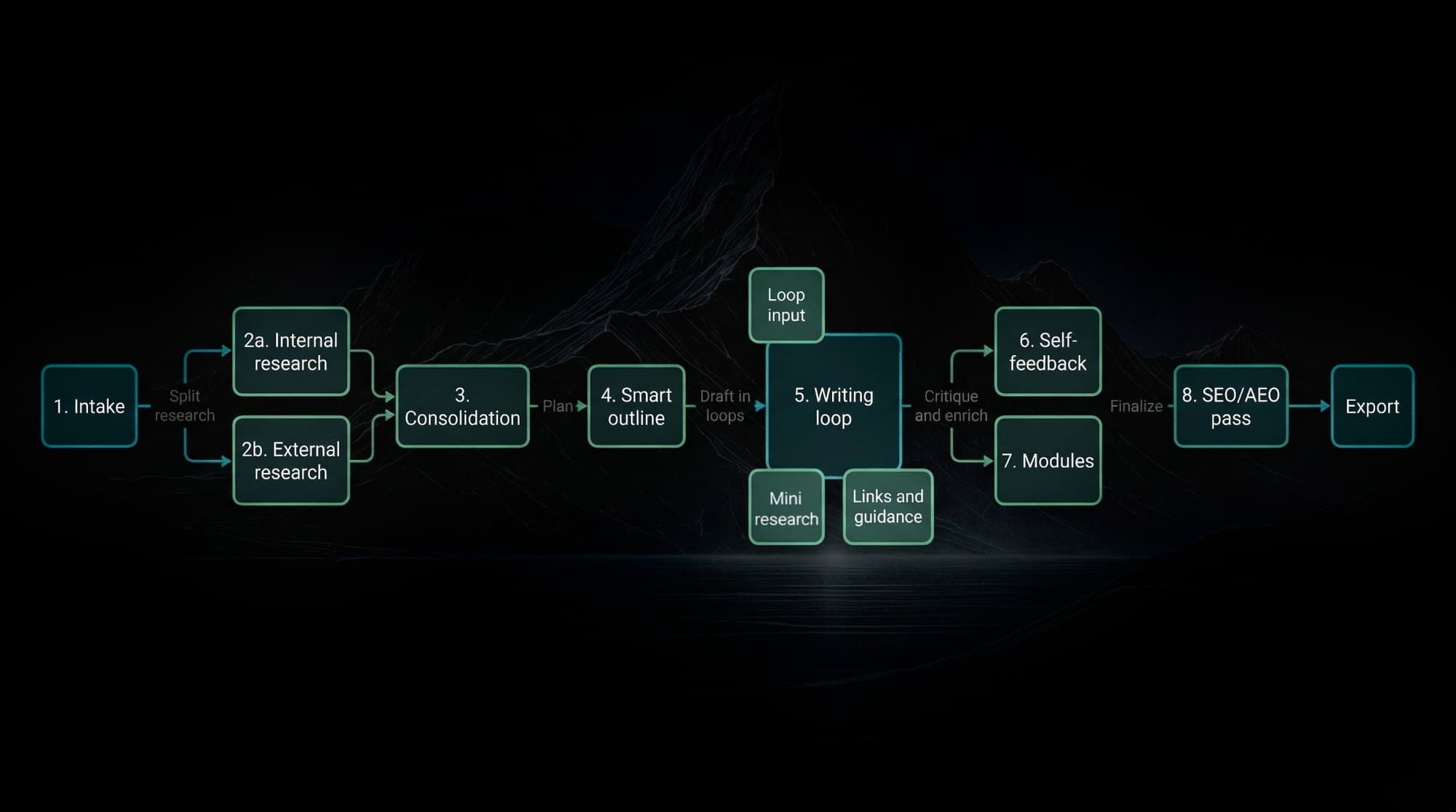
How to build an AirOps content writing workflow that can research, critique, and stay on brand
A practical model for turning AirOps into a real content writing system with research, self-critique, vector knowledge bases, brand guardrails, and release checks.

Content workflow software: what it is, what it costs, and what to buy
A practical guide to content workflow software, including the three tool categories people confuse, current pricing patterns, and how to choose the right layer.
Why headless CMS is not enough for AI content operations
Headless CMS helps with delivery, but it does not solve execution, governance, or reliable AI behavior.
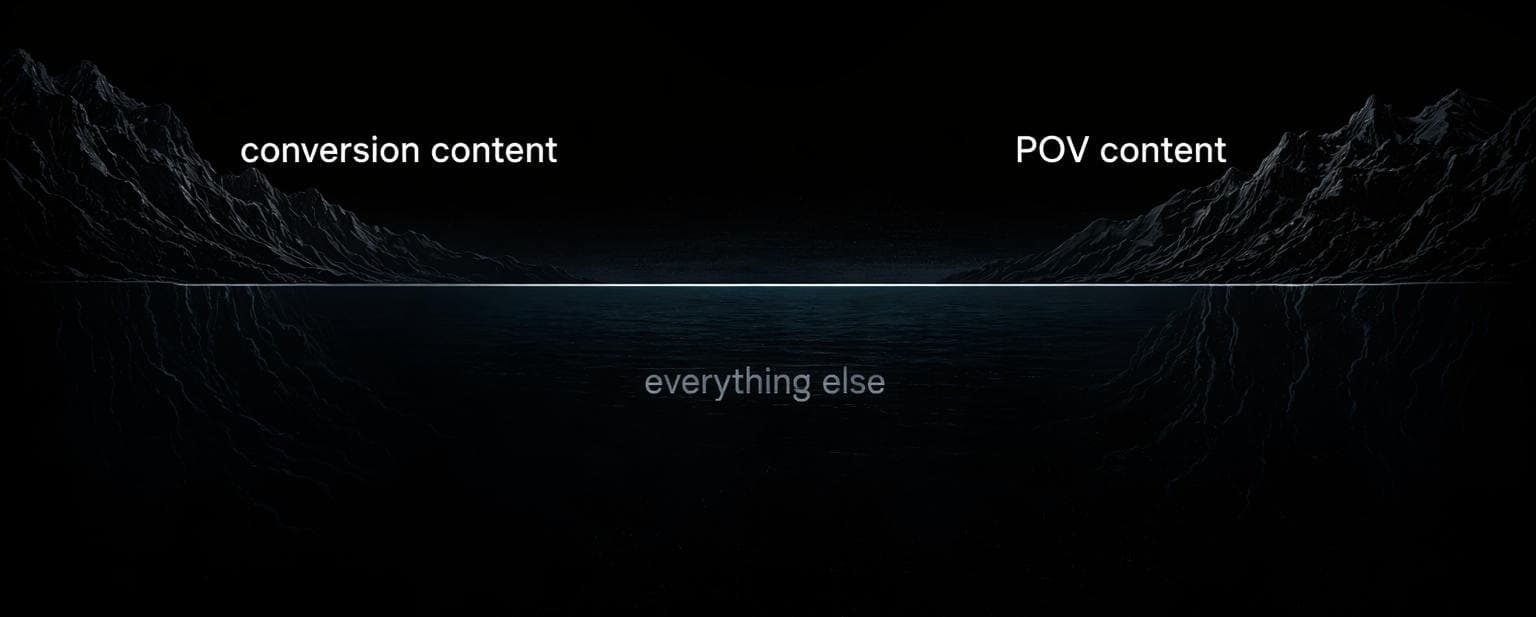
What belongs in an AI knowledge base for marketing teams
A practical model for deciding what marketing teams should actually put into an AI knowledge base so agents stay useful and grounded.
Search intent mapping for AI content workflows
Why AI-assisted content systems fail when they skip intent mapping, and how to make intent an explicit workflow input.

Internal linking as a system in AI content pipelines
Why internal links need to be designed upstream in briefs and workflows instead of added as a last-minute SEO chore.
How to build AI content briefs that don't collapse in production
A practical guide to building AI content briefs that survive real workflows, not just one good draft.
The anatomy of a reliable AI marketing workflow
Most teams are still building prompt chains. This guide breaks down what a real production AI marketing workflow looks like, layer by layer.
How to audit your content system before building a Context OS
A practical pre-implementation audit for teams that want to replace content chaos with reliable AI-first execution.
Content quality assurance for AI pipelines: tests, linting, and release gates
How to build a QA layer for AI-assisted content operations that improves reliability without killing velocity.
Content engineering: from page publishing to system design
What content engineering is, why it matters now, and how teams are using it to build reliable AI-first content operations.
Why most AI content systems fail - and what companies should actually build instead
Most AI content systems fail for one reason: a systems mismatch. Here is what to build instead if you want reliable, compounding business outcomes.

What is a Context OS?
A plain-English breakdown of Context OS, Content OS, context layers, and the operating structure that makes AI execution reliable.
Overview: How context operating systems work
Why AI systems fail without source truth, workflow contracts, QA gates, and a portable operating layer agents can follow.
The Content Draft Workbench
A hands-on proof of concept for turning knowledge bases into living drafts.
Context OS Foundations: The Quiet Architecture
Why AI-first systems need source truth, workflow contracts, QA gates, and an operating layer built for agents.
The Prompt Brittleness Tax
Why prompt-heavy systems degrade and how Context OS reduces the tax.
Agent Workflows That Stick
How to design agent workflows that survive real operations, not just demos.
Markdown Knowledge Systems That Don't Rot
A practical blueprint for turning Markdown into a living, agent-readable knowledge base.
Context Strategy: Designing for Maximum Signal
A framework for deciding what context agents should see, and why.
Operational Docs as Systems, Not Pages
Why operational documentation must behave like software to be usable by agents.
AI-First Information Architecture
Rebuilding IA so agents can navigate, reason, and act without human translation.
Your product changed. What has to change in the AI system?
Follow a product change through knowledge, retrieval, instructions, tests and published outputs, with owners and evidence for each update.
Governance for Agentic Systems
A practical model for controlling agent behavior without killing momentum.
Why mantis shrimp feel like science fiction
Mantis shrimp sound fake until you look at the eyes, the strike mechanics, and the weirdly strategic way they move through the world.